
If you’re an adult child like I am, there’s a real chance you’ll get a call like the one we got last night. Here’s what actually happened, told the way it happened to us, with a plain ‘what this means for you’ after each part. Each situation is different, of course. But his one may help you prepare in any case.
When we got, “the dreaded call”
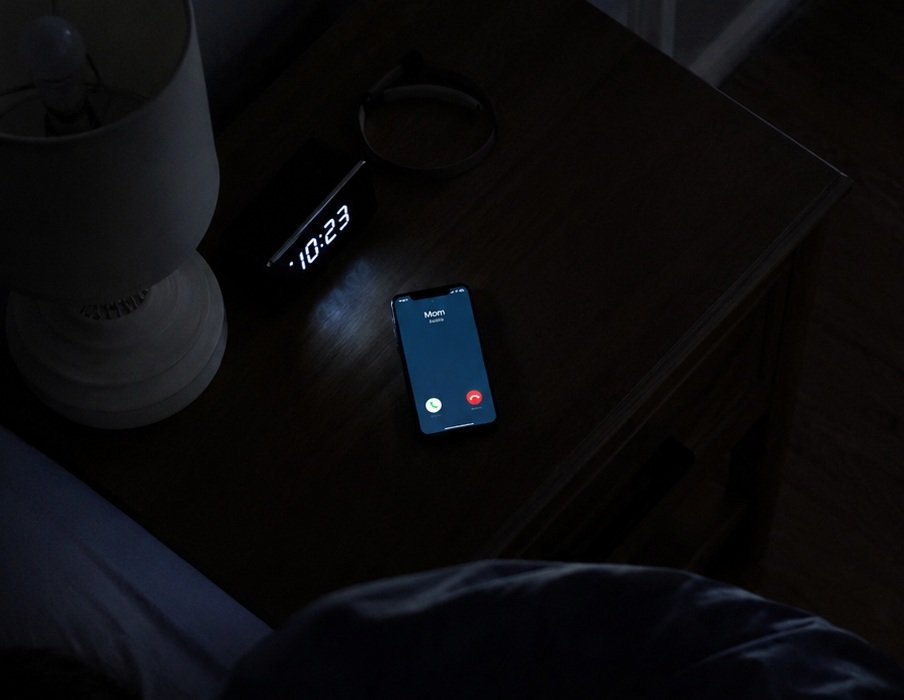
It’s 10:23pm. We had just dozed off. The call rattled us out of sleep. We knew it must be mom because only her number and our adult kids can punch through the “Do not Disturb.” Sure enough, it had happened. My wife’s father-in-law had stopped breathing just minutes before. While we saw this coming for months, it was still a shock for mom and for us. My wife told her we’d be right there and that she’d call her back in a minute.
We were throwing on clothes half-blind. I grabbed a laptop and charger and some snacks; my backpack already had a shave kit in it. I knew it was going to be a long night. I told my wife to grab an overnight bag. She admitted, later, that she would have walked out the door with nothing.
We did call right back, sliding into the car, punching Bluetooth buttons to get the speaker phone off. My wife stayed on the phone with her mom most of the drive, just giving comfort, letting her know we were on the way. When we hit traffic, I encouraged her to pause that call for a minute and get her mom to call one of the other siblings, so mom wouldn’t be sitting there alone in silence between calls. In that gap, we called 911. Then we let next of kin, his oldest daughter, know.
I helped my wife soften the voicemail to his daughter. Not “Your dad died.” A 10:30pm call and my wife’s voice alone would say enough. So it was just: “It’s about your dad. Call me right away.”
After getting through road work traffic, we arrived about eleven minutes after calling 911. First responders were already there.
What this means for you
- Pack while you’re still able to think. Once you’re in the house, and your stuff is at home, it’s too late. Grab chargers, a laptop if you may need to handle things remotely, snacks, a change of clothes, any daily medications you take. Assume you’re gone all night and possibly into the next day.
- Keep the distressed parent on the phone, but get backup dialed in fast. If your spouse or you is the one comforting a parent by phone, use any lull to get another family member (a sibling, another relative) looped in so the person isn’t alone between calls.
- Plan a message before you text or call the deceased’s other children. A late-night call from a distraught in-law is already a signal. You don’t need to state the death outright in a voicemail. “It’s about Dad. Call me right away” is enough, and it lets them receive the news from an actual conversation instead of alone, reading a screen or listening to a voicemail.
- Call 911 without hesitating, even if you’re fairly sure it’s already over. That decision isn’t yours to make from the road (see Scene 2).
What we walked into
By the time we got there, two sheriff’s cars, an ambulance, and a fire engine blocked the road. Four firefighter-paramedics were already in the house. The medics had pulled Dad onto the bedroom floor and were doing chest compressions. He was pale, naked from the waist up, tubes coming out of his mouth, a machine buzzing nearby. Gurgling and glimpses of EMTs pumping his chest, hard, came through the open bedroom door. The sheriffs, in full vests, equipment, gun, radio, and all that comes with it, stood politely with my 83-year-old mother-in-law, asking her questions, while twenty feet away medics fought to bring her husband back.
They worked on him for almost two hours. At one point the leader came into the dining room and set out expectations, “he’s not responding, we’re doing all we can, and we’re going to do more, and we’ll let you know.” Just before midnight, they told us they couldn’t resuscitate him. They asked if there was anything we wanted them to do. But we didn’t know what to ask. As they started packing up to leave, I thought to ask them to move him onto the bed before they went. Just to reduce mom’s trauma of seeing him sprawled on the floor. They asked if mom wanted to go in and say goodbye and they all four stood hands in fig leaf position with somber looks and waited as long as mom needed.
That was the easy part of the night.
What this means for you
- Once you call 911 for a possible death, paramedics will attempt full resuscitation, even if you’re sure it’s over. Age, apparent decline, or a family member saying “I think he’s gone” does not change this. Dispatch routes you to fire/medical, and they are obligated to try, unless there’s a valid DNR or POLST (Physician Orders for Life-Sustaining Treatment) that’s physically handed to them on arrival. Not mentioned. Not “on file with his doctor.” In hand.
- If your parent has end-of-life wishes on paper, that paper needs to live somewhere obvious (refrigerator, bedside table, wallet), not in a drawer or a lawyer’s office. Otherwise the system defaults to save-life-at-all-costs, regardless of prognosis or age.
- You may not get to control whether other family members see the traumatic parts of the scene. If there’s a version of this you can prepare for, decide in advance who’s arriving and in what order, and whether someone should meet them at the door first.
The sheriffs
While the medics worked, the sheriffs stood politely while my mother-in-law sat at the table. They asked her to walk through the entire day, every hour, more than once, collecting every prescription medication in the house, cross-referencing it against his medical history. They kept asking what she’d given him in terms of medication and food.
I had the instinct that we’d need to call a mortuary to take the body, but one officer said I could not do that. It was confusing at first. Also, the one I asked seemed not to have all the information. The one in charge took the time to explain things. They had to take a lot of photos and kept probing and asking questions.
I’ll be honest: as her son-in-law, sitting next to her watching two armed officers question my grieving mother-in-law while paramedics pumped on her husband’s chest, my first reaction was to protect her from all this. It felt like they were implying something happened. It took a few minutes before it clicked that this was their job and service to us, and once it did, I was able to step back and explain it to her gently instead of letting my own reaction show.
What this means for you
- This is routine, not suspicion. For any unattended or unwitnessed death (meaning no doctor was present and it wasn’t an active hospice case), law enforcement responds alongside EMS as a matter of procedure. This happens whether the person was 45 or 95.
- What they’re actually doing: the county coroner or medical examiner has to sign off that the death was natural before anyone can move forward. The officers on scene are gathering the exact information the coroner needs to make that call, usually relayed by phone. It can take hours.
- If you feel yourself getting protective or defensive toward the officers, that’s normal but it’s worth catching in yourself quickly. The family member being questioned is often taking cues on how alarmed to be from your reaction, not just from the officers’ tone. Staying calm yourself does more for them in that moment than anything else you can do.
It’s your problem now
Once the paramedics called it, the room emptied of urgency fast. After the EMTs left, the sheriffs stayed an extra hour and a half working the coroner call. Eventually they told us the coroner seemed satisfied, didn’t need the body, and that it was now on us, at 1am, to find a mortuary. “Because there are laws on how long a body can be in the house,” one of them said.
We didn’t know what that meant, practically. I used search to find local mortuaries with 24/7 service, and called the one with the closest address. In addition, the final burial was to be 300+ miles away. The sheriff told us some mortuaries have partnerships and coordinate transportation. But the final burial place was only open 9 to 5. Unlikely they’d be able to do anything at 12:30am. I texted the info to my wife to send to the daughter so we could coordinate.
What this means for you
- Once the coroner or medical examiner verbally releases the body, moving it becomes the family’s job. In California, there isn’t a hard statutory clock on hours a body can remain in a home, but law enforcement will tell you to move on it, and in practice you should treat it as urgent. Some other states do set explicit time limits; this is one of the places where it’s worth knowing your own state’s rule in advance, or asking the officers directly what applies locally.
- There is no handout, no checklist, no packet given to you at this point. You are expected to already know to call a mortuary. Save a funeral home’s number in your phone before you need it, the same way you’d save a locksmith’s.
The 12:30am call to the mortuary
The answering service asked a lot before they’d commit to anything: was he a veteran, any infectious disease history, his weight, his date of birth. Then they needed a case number and to speak directly with law enforcement before they’d dispatch anyone. Then: “we’ll call you back.”
An hour later, they called back. One to two hours for pickup.
An hour and a half after that, a man in a black suit and a thin tie, wearing a lot of cologne, knocked on the door. He was polite and efficient. Reminded me of Harvey Keitel in Pulp Fiction. He looked over the situation, adjusted the blanket around the body uncovering his bare feet (I kept covering his feet), asked what we wanted him dressed in for transport, and then he and his colleague moved him onto a gurney and left. We signed a form authorizing transport and storage, nothing about services, costs, or final arrangements. Just permission to take him and hold him.
What this means for you
- Have this ready before you call, if you can: veteran status, weight, date of birth, any infectious disease history, and whether there’s already a preferred funeral home.
- The mortuary cannot dispatch until they have a case number from law enforcement. Get that number from the responding officers before they leave the house.
- You’re allowed to ask for a cost estimate over the phone, even at 1am. Most people don’t think to, because they’re not in a state to negotiate. Ask anyway, or have someone with you ask.
- What you sign at pickup is authorization for transport and storage, not a contract for services. Cremation, burial, embalming, and final cost all get worked out later, during business hours, not with the two men who showed up in the middle of the night.
When we learned: Power of attorney doesn’t survive the person
We knew we’d eventually need to coordinate with his adult children, who held power of attorney with specific authority over how his death should be handled. Except the funeral home was in Los Angeles and didn’t open until 9am, so there was no way that night to know costs, logistics, or how any of it would work with a local provider.
And underneath all of it was a real conflict waiting: the kids wanted him cremated. The widow did not want that. Nobody agreed, and nobody in the house at 1am had the authority to settle it.
What this means for you
- Power of attorney ends the moment the person dies. It has zero legal force after death, no matter how specific or recent the document is. Family members frequently don’t know this and assume it carries over.
- What actually controls disposition after death, in most states, generally in this order:
- Written instructions from the deceased (a will, a pre-need funeral contract, or a signed disposition-of-remains directive), if one exists.
- If not, state law designates a priority list of who has the right to decide, typically the surviving spouse first, then adult children. In California, if there’s more than one person at the same priority level (say, several adult children and no spouse), the funeral home generally needs agreement among them, or at minimum won’t act on a unilateral instruction if another person of equal standing objects.
- If the family disagrees and there’s no clear written instruction, the funeral home will often pause everything until the family resolves it, or, in worse cases, until a court does.
- If there’s any chance of disagreement in your family about cremation, burial, or anything else, get it in writing while the parent is alive. Many states, including California, have a specific legal form for this (a “disposition of remains” designation), separate from a will. Don’t leave it to be negotiated over a body.
Money, Who Pays Now, Who Pays Later
This is the part almost nobody explains, and it matters immediately, not eventually.
The estate usually pays for final arrangements, but the estate can’t write a check the night someone dies.
What this means for you
- Who issues the death certificate? The state, through the county or state vital records office, but it isn’t automatic. The funeral home typically prepares and files the paperwork. The cause-of-death section has to be certified by either the attending physician (if the death was expected and medically explained) or the coroner/medical examiner (as in our case, since it was unattended and unwitnessed). Once that’s signed, vital records issues certified copies, and the funeral home usually orders the first batch for the family.
- How long does that take? It varies by state and by how backed up the coroner’s office is. In California, it commonly runs one to a few weeks; it can stretch longer if the death required a coroner’s investigation, as ours did.
- Who pays until then? Whoever signs the funeral home’s service contract personally guarantees payment. Funeral homes do not wait for probate or for an executor to be legally appointed. That person can seek reimbursement from the estate later, once someone has legal authority to release funds (called letters of administration or letters testamentary), but they’re personally on the hook in the meantime. If no one will sign, the funeral home holds the body in storage, and storage isn’t free either.
- What can shorten the gap: life insurance sometimes pays out faster specifically for funeral costs, and some banks will release a limited amount from the deceased’s account for burial expenses even before probate finishes; this depends entirely on the bank and the state.
The person the process doesn’t account for
Somewhere in all of this (the sheriffs, the medics, the phone calls, the paperwork), there’s Mom. A woman who just watched her husband of decades die on the bedroom floor, and much of the process didn’t account for her.
She kept trying to go into the bedroom. What she needed made no sense. Shoes? For who? She was dazed. “Oh, there are his glasses. And his phone.” We didn’t know if letting her in was going to help her or wreck her. He was still pale, tubes still in, on the floor where the medics had worked on him. At my wife’s hesitant nod, I didn’t stop her. We stayed close instead, a hand on her, while she went to him, kissed him, talked to him like he could still hear her. I stayed near enough to catch her if she went down too.
What this means for you
- There’s no clean rule for how much to shield someone from that scene versus letting them have their own goodbye. What we landed on, without really deciding it out loud, was: don’t block her, don’t leave her alone in it, and watch her body as closely as you’re watching the room.
- If you notice yourself reacting strongly (anger at officers, fear for the parent, your own shock) manage that quietly. The person you’re supporting is reading your reaction as a signal for how bad this is. Staying visibly steady, even if you don’t feel it, helps them more than words do.
If you take one thing from this
Talk about it before it happens. Know where the DNR lives, if there is one. Know who has final say on cremation or burial, and get it in writing if there’s any chance of disagreement. Know that someone in the family will likely have to personally front the funeral costs before the estate can touch a dime. And know that when it happens, it will not feel procedural at all, even though almost everything that occurs that night is.
Note that we live about 15 miles from my wife’s mother. My own mom lives 1000 miles away. Those are very difference scenarios.